
0:00
0:00


Jacob Frisard was born in 1753 in Villeret, in the Swiss Jura, near Bern. He served his horological apprenticeship in La Chaux-de-Fonds. Frisard settled in Geneva around 1784. There he worked for Pierre and Henri-Louis Jaquet-Droz and their associate Jean-Frederic Leschot.
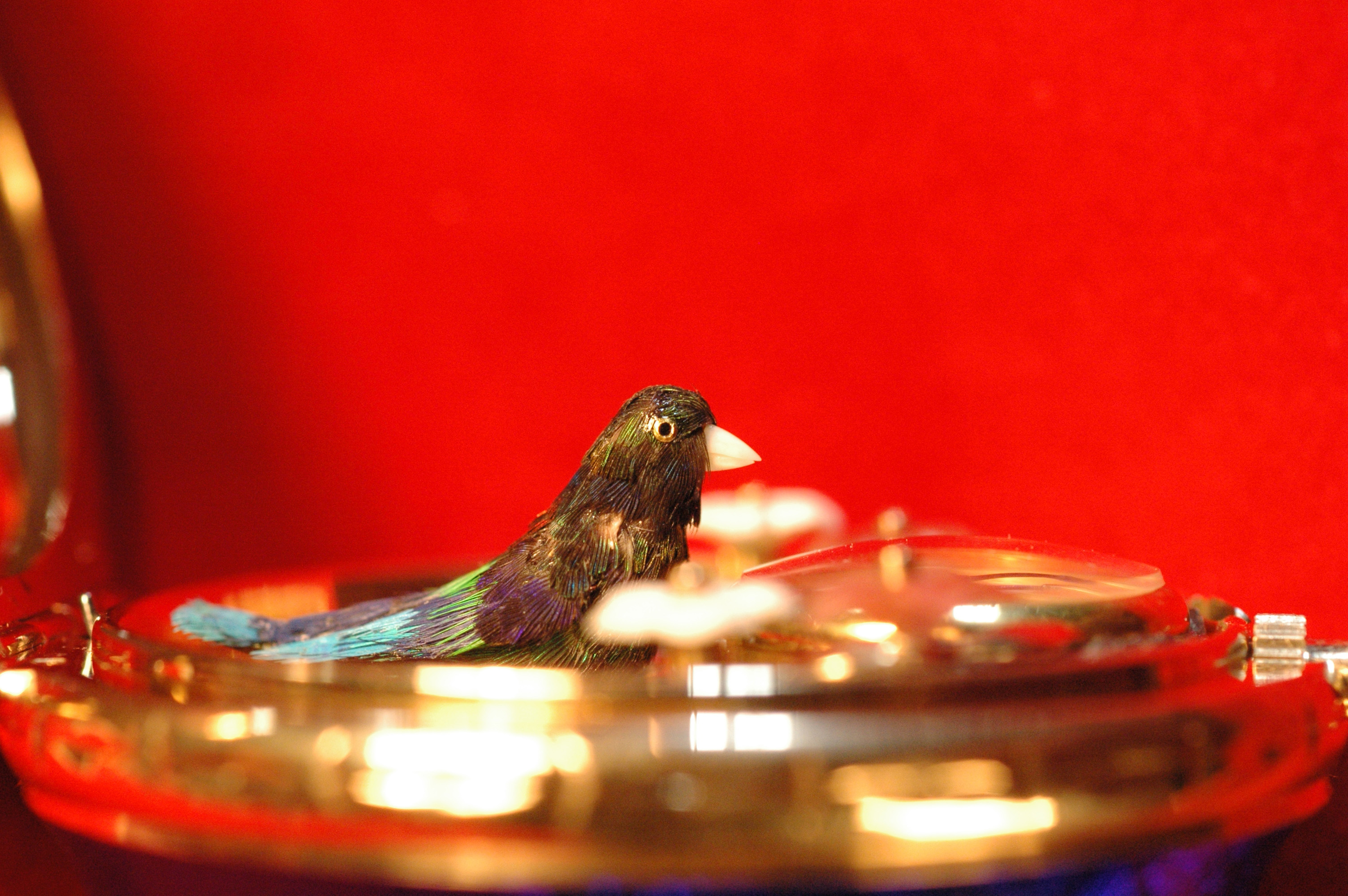
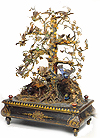
Frisard became a great master of singing bird technology, creating some of the most wonderful pieces sold by the Jaquet-Droz firm, and greatly contributing to their fame. His close collaboration with Leschot was to result in some of the most important technical innovations in the field; for example, the automatic closing of the bird medallion.
After a time, however, Frisard desired to become famous in his own right. He sought to show his creations to influential people, including Napoleon Bonaparte. His efforts remained fruitless, however, due to France’s difficult economic situation at the time.
In the early years of the 19th century, Frisard embarked on a series of journeys to exhibit his mechanical pieces. During one of these journeys, in 1810, Jacob Frisard died at the age of 57.
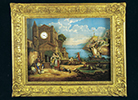
Among Jacob Frisard’s most remarkable pieces:
In homage to this incomparable historical master of singing birds, Christian Bailly has adopted the name “Jacob Frisard” for his own creations. Conceived in the tradition of the “golden age” of singing birds, they are constructed with today’s modern technology and state-of-the-art materials and methods.
Christian Bailly, born in 1942, began his career in 1965 in Paris’ famed flea market. After specializing in automata and mechanical music, in 1979 he opened a shop in the Louvre des Antiquaires, then in New York’s Place des Antiquaires (1987-1994). Over the course of many years, he built an exceptional collection of automata, which was recently sold at auction. His passion for automata began over thirty years ago, when he purchased his very first piece. Since then, he has pursued his quest throughout the world, with enthusiasm and determination.
It was while examining the mechanical pieces he had acquired in his travels, taking them apart and restoring them himself, that he began to learn their secrets. He soon was able to identify the automaton makers, and to restore each piece to its original splendor. For a long time, Christian was the only antique dealer to specialize in automata, and he gained international fame for his knowledge and for the superb quality of the pieces he offered in Paris and New York. Official recognition for these qualities came when he was nominated to become an Expert with Paris’ Cour d’Appel and Customs Assessor for the EEC.
His interest in automata having led him to do extensive research, Christian shared his knowledge, publishing “Automata, the Golden Age 1848-1914” (Sotheby’s Publications, 1987), which appeared in French, English, and German editions. It was complemented by a video documentary “Automata, Mechanical Marvels of the 19th Century”, with narration by Dick Cavett. The book was a great success, being reprinted several times; it has become the essential reference work for professionals, auction houses, experts, collectors and enthusiasts the world over, as well as for the world’s major museums.
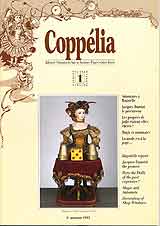
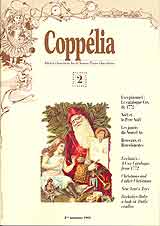
In order to promote automata, Christian Bailly organized exhibitions that were tremendously successful: Bagatelle (1993), Liège (1994), Japan (1995), Rosny-sur-Seine (1995), Helsinki (2000) and Reims (2001). In 1993 he created the Association des Amis des Automates, Poupées et Jouets Anciens. The Association published a review called “Coppelia” and organized lectures and cultural visits in France and abroad.
Expanding his vision to a related field which had always fascinated him, Christian went on write the book “Flights of Fancy: Mechanical Singing Birds”, with Sharon Bailly. Published in 2001 in a bilingual French-English edition by Antiquorum Editions, it traces the evolution of singing birds from antiquity until the 20th century, with particular attention given to the end of the 18th and early 19th centuries. This book, in turn, is quickly becoming a classic and universal reference work.
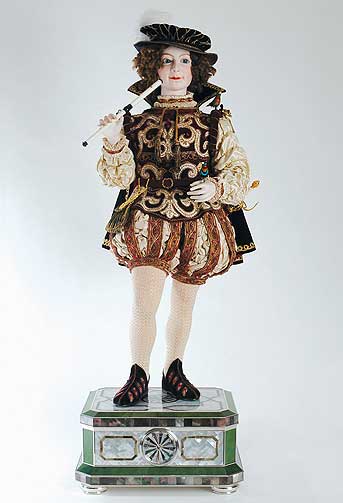
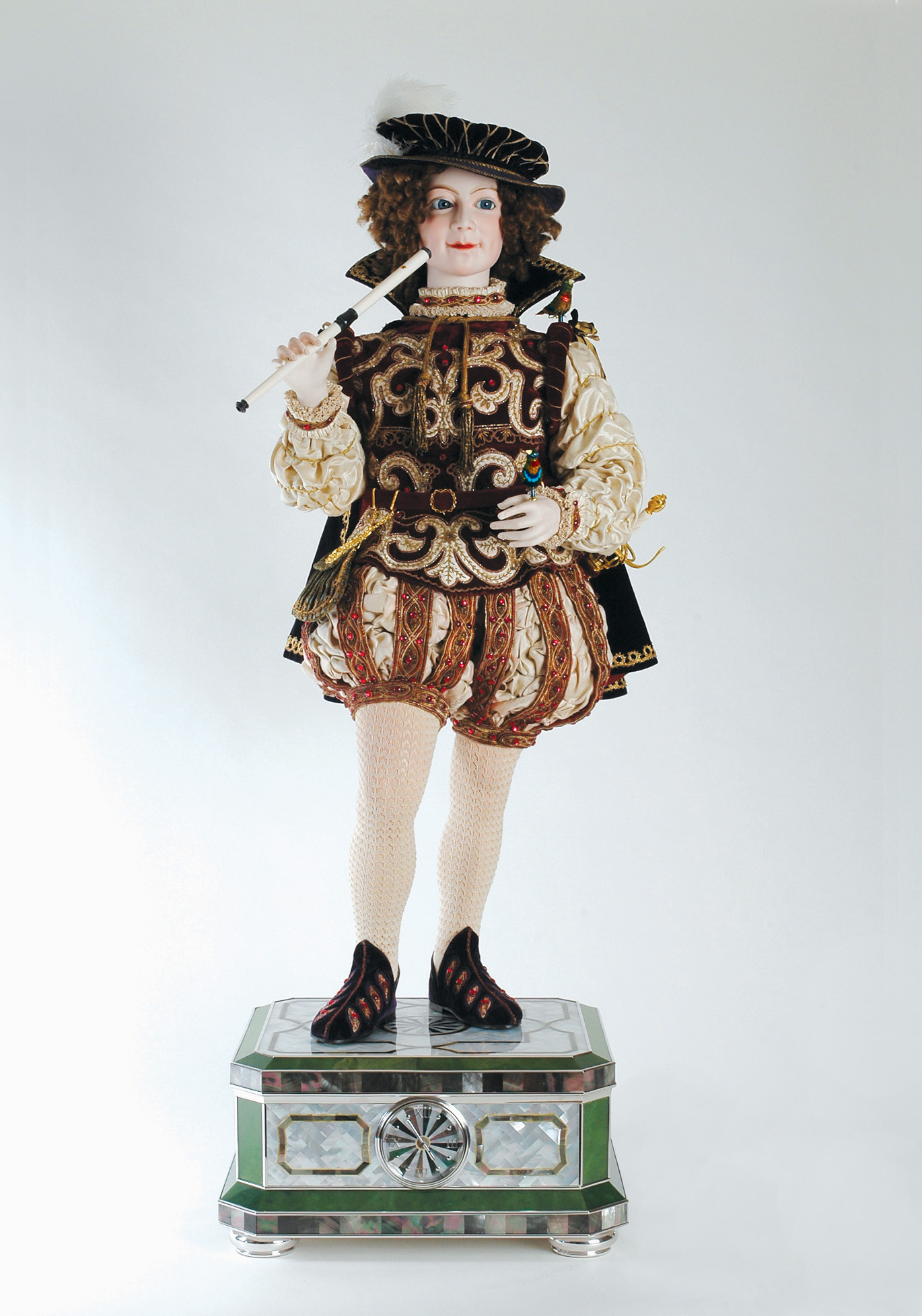
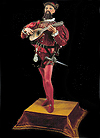
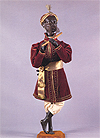
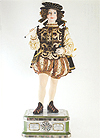
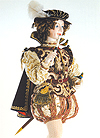
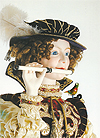
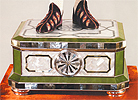
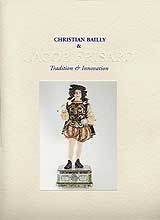
Standing on a mother-of-pearl and jade base accented with gold, a young man dressed in silk, satin, and embroidered velvet, plays the flute. Two birds, one perched on his shoulder and the other on his left hand, sing one after another, as if in response to the flute music.
This unique piece, which has just been finished, was created according to time-honored traditions.
The hands and the head, with its animated “paperweight” eyes, are made of finely modeled porcelain, painted in the tradition of the end of the 18th century. The Renaissance-inspired costume is completed by a velvet purse and a finely wrought sword mounted on its cross-belt.
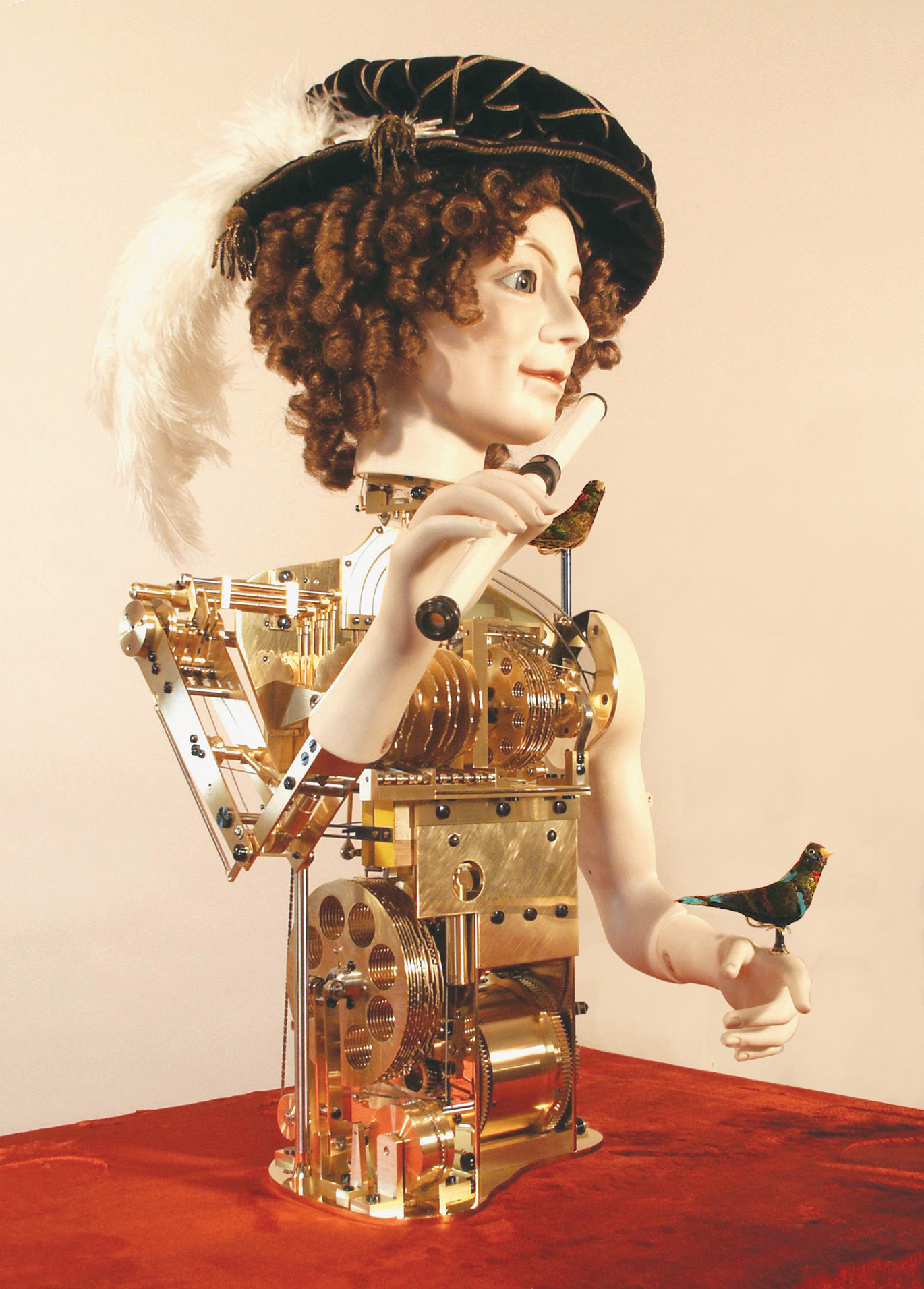
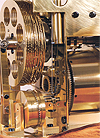
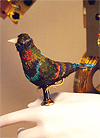
The Bird Trainer brings a flute to his lips and plays two tunes, each 28 seconds long. The two birds open their beaks, moving their tails, flapping their wings and rotating in the most natural manner. They whistle two tunes, each lasting 14 seconds, one after the other. The mechanism that animates these tiny birds is placed inside their bodies and includes 37 cams. In a completely lifelike way, the birds’ gestures are synchronized with the tunes they whistle.
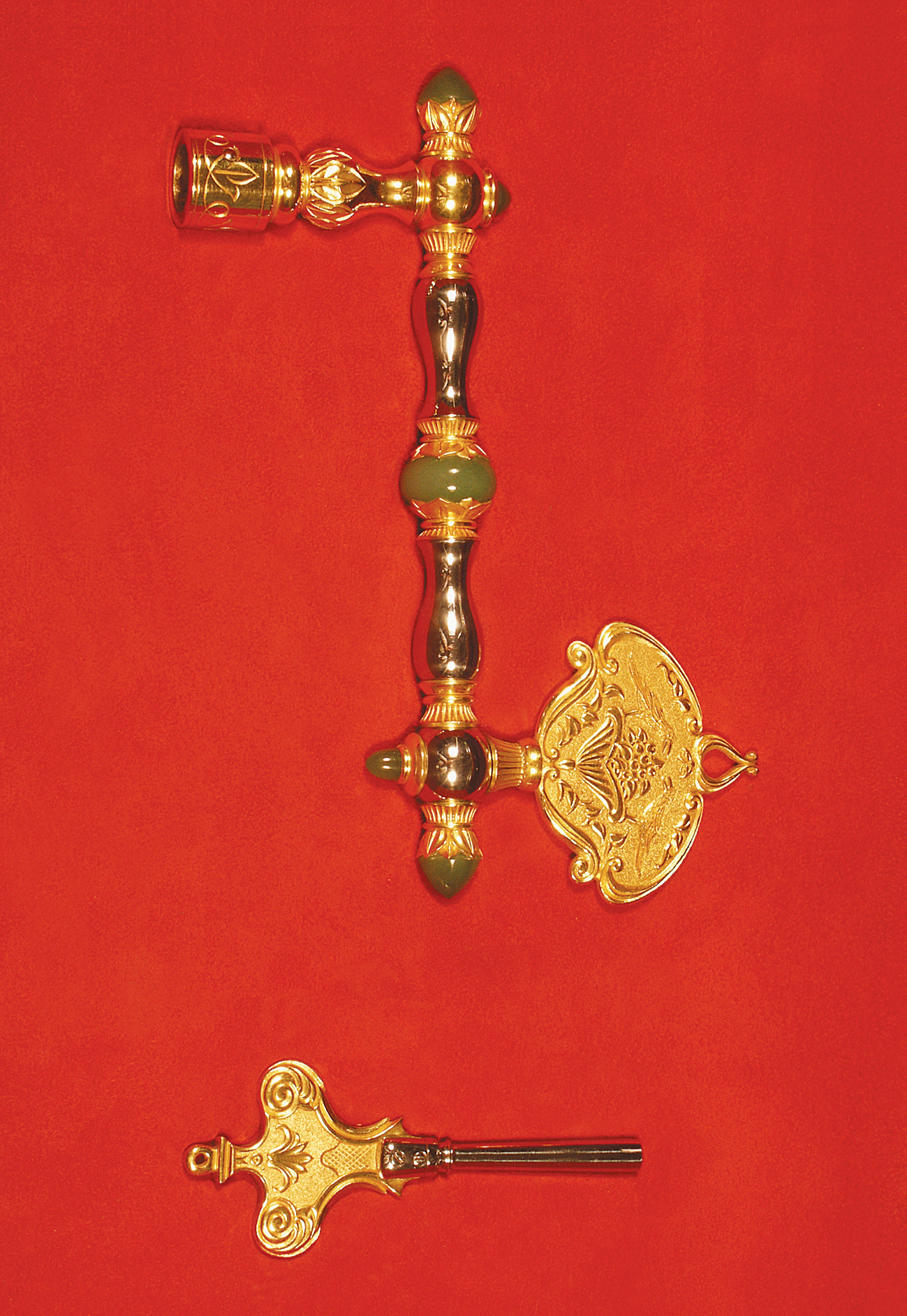
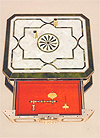
In the middle of the base is a clock, conceived in the finest Swiss clockmaking tradition, with an 8-day going movement and a seconds hand. When a secret drawer is opened, a comb and cylinder musical movement begins to play. The action of shutting this drawer automatically winds the movement. Inside the drawer, one finds two elaborate and precious keys within a scarlet leather case.
This extraordinary and completely novel piece required six years from conception to finish, with approximately 15,000 hours work by a group of artists and highly skilled artisans.
The Bird Trainer is 1.25 meters tall and weighs 55.5 kilograms.
It is composed of 2,340 mechanical parts, all finely gilt, with blued screws and polished steel, as follows:
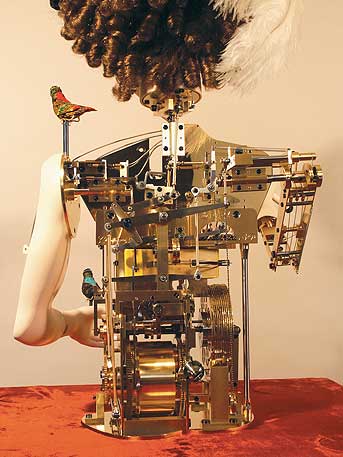
The best designers, sculptors, modelers, porcelain artists, painters, goldsmiths, clockmakers, jewelers, cabinet makers and marquetry artists, wig-makers, seamstresses, and embroiderers of France and Switzerland contributed to the creation of this masterpiece.
Conceived in the finest 18th century tradition, it is an objet d’art that combines today’s high technology with the skilled and patient artistry and horological techniques of the past.
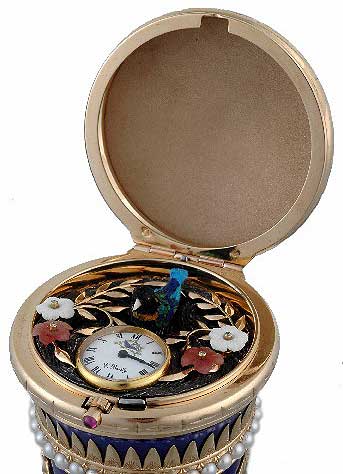
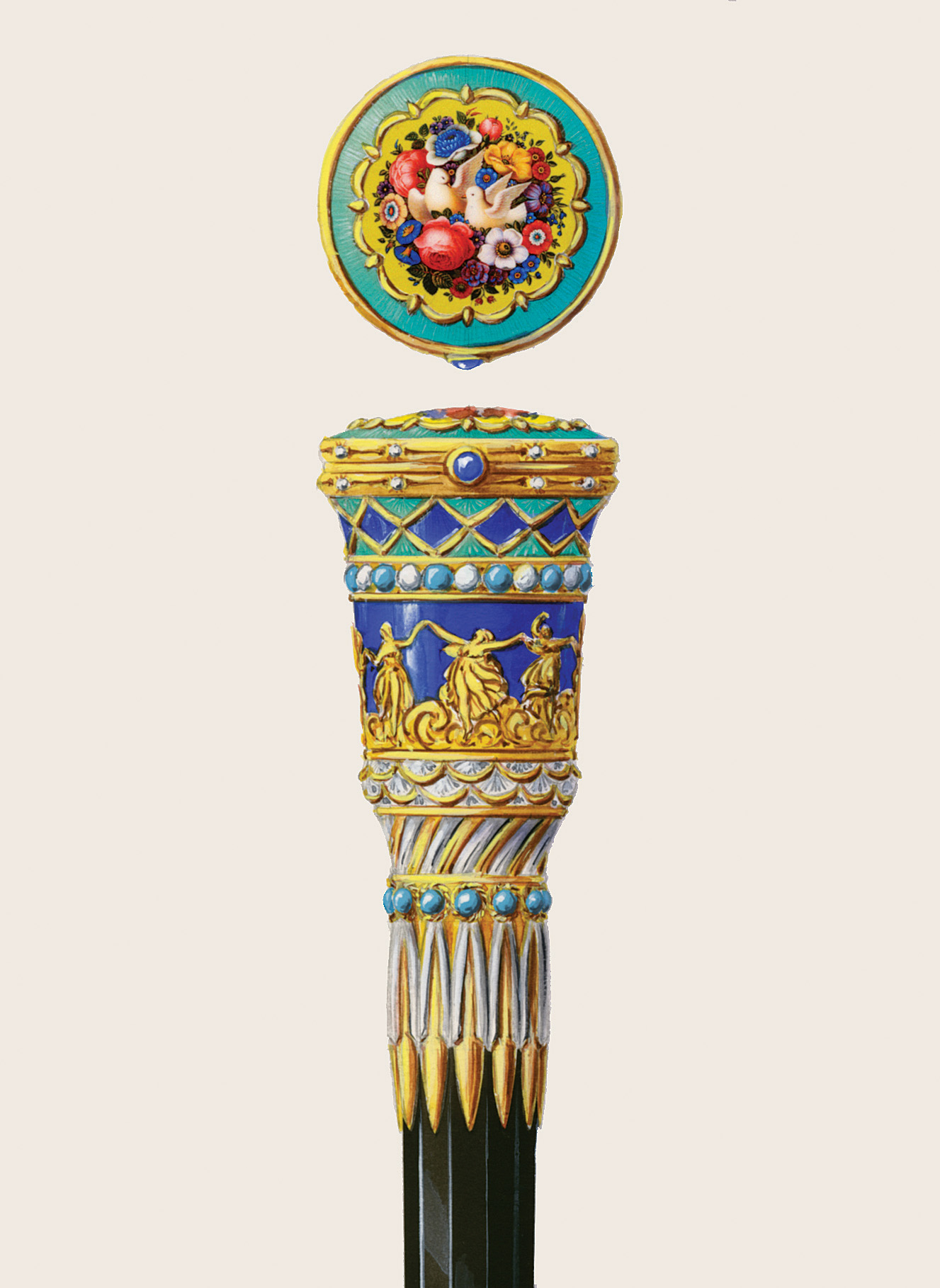
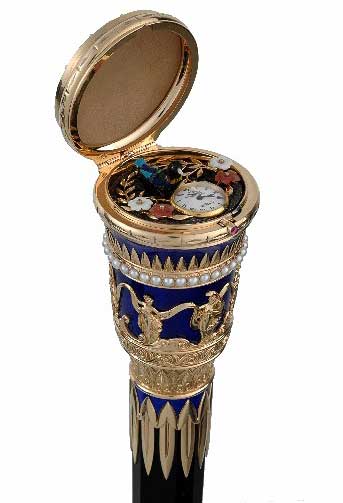
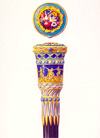
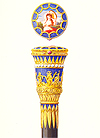
Fascinated by the legendary mechanical singing bird pieces of the past, and frustrated because they were seemingly lost forever, Christian Bailly decided to create a new piece in the image of the antique ones he so admired. After putting the finishing touches on his "Bird Trainer", he began work on an elaborate cane with watch and singing bird, inspired by the only surviving example of this type of piece (see p. 228, "Flights of Fancy").
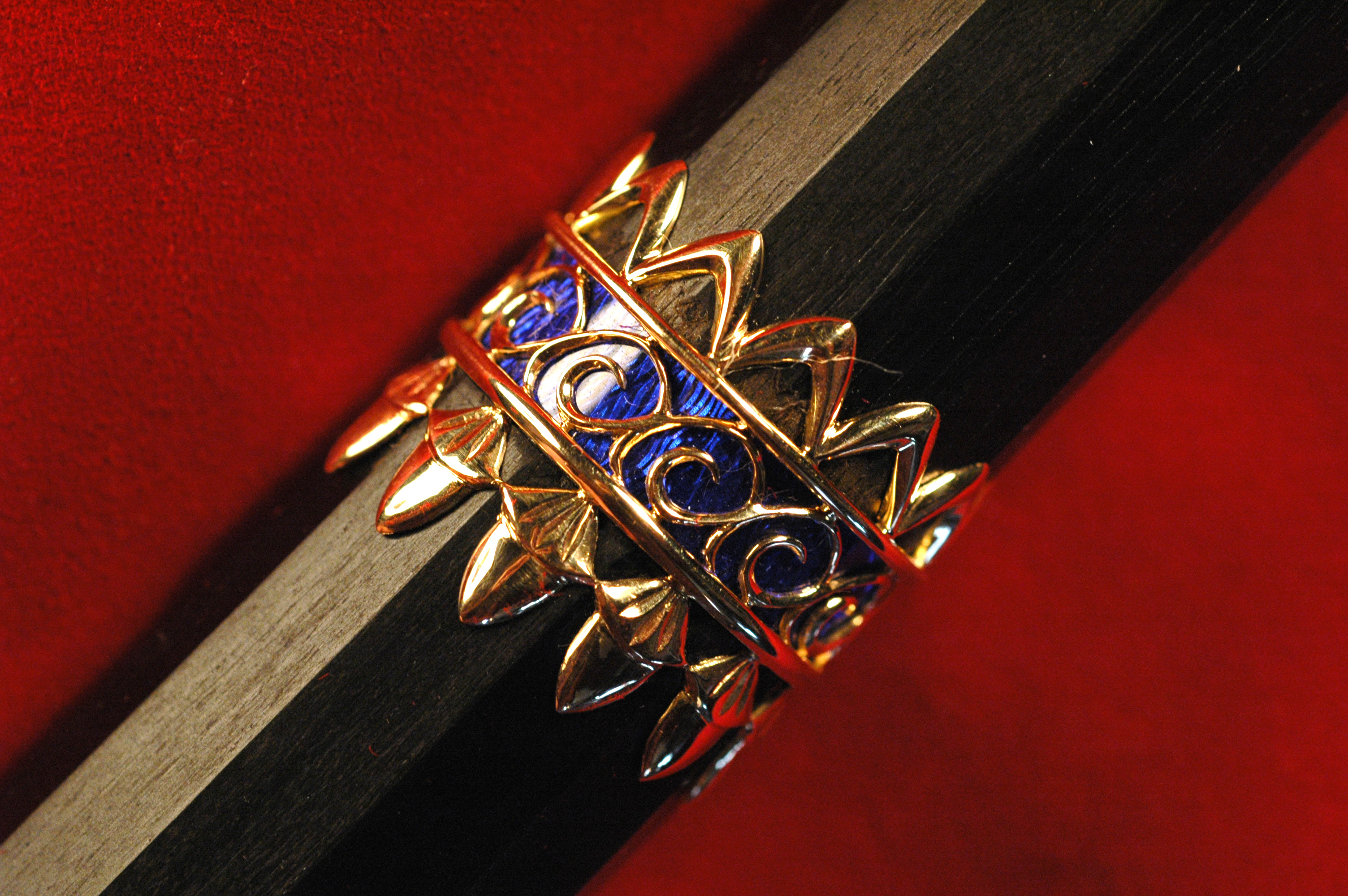
The cane was conceived in 18th century tradition, and is inspired by the genius of master artisan Jacob Frisard. Its mechanism measures 32 mm. in diameter and 41 mm. high. It is made up of 445 parts.
To create this exceptional cane, Christian Bailly has again called on a small and highly select group of artisans, including designers, painters, engravers, watchmakers, goldsmiths, and enamelers. Only an extremely limited quantity of this extraordinary and prestigious cane will ever be made, each example being a one-of-a-kind, highly personalized masterpiece.
Shipping costs are included in the price for mainland France and Switzerland. For other countries, please contact us by e-mail, via the contact page.
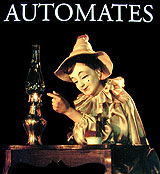
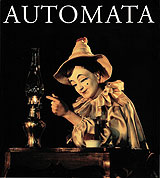
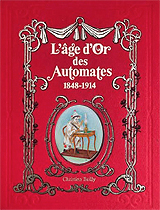
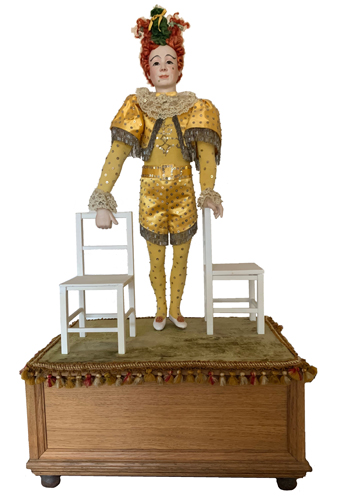
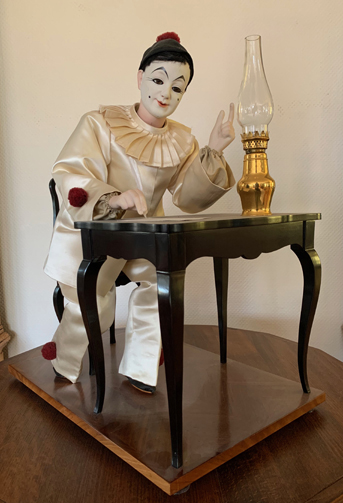
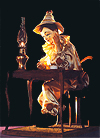
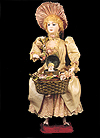
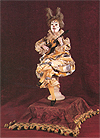
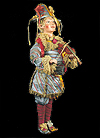
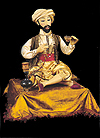
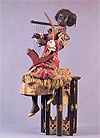
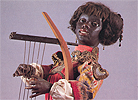
And after you have read about the automata and studied their histories, you can see them move, in living color and dramatic close-ups, in a rare new film on cassette by John Dessarzin. Watch the Mandarin merchant smoke a pipe. Observe the blackamoor play a haunting air on an antique harp. In seven and a half minutes you will witness the full range of movement of 25 automata with a delightful musical accompaniment. With its skillful pace and artftul editing, Monde Magique is an experience as exciting as a whole museum of automata. Moreover, since nearly all the marvelous creations featured have been sold to private collectors, this rare film is now the only means for connoisseurs to enjoy them in their full glory.
Détail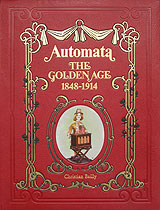
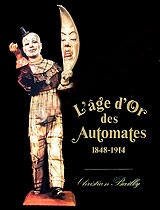
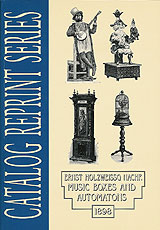
Once available only through selected retail establishments, this unique history of classic French mechanicals is now offered by author Christian Bailly at a special discount price. A sumptuous collector's item with 360 pages and 210 large 4-color illustrations, Automata brings you the secrets of a magical world conceived during a happier era. The first study of its kind, Automata breaks new ground for the collector and specialist, but would also provide endless enjoyment for anyone who can share the wonder of a child. The lavish illustrations are accompanied by authoritative histories of the seven leading French inventors of these animated mirabilia. The book also includes chapters on mechanisms, keys, musical movements, trademarks and restoration techniques. Reproduction of three leading 19th-century manufacturers' catalogues represents an invaluable scholarly resource for the serious connoisseur.
Détail
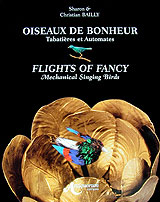
This book is an indispensable
reference for collectors and specialists, an introduction to the
subject for those as yet unacquainted with it, affording all with the
opportunity to discover or delve more deeply into the delightful world
of mechanical singing birds.
It traces the evolution of singing birds from Antiquity to modern
times, according particular attention to the end of the 18th and the
beginning of the 19th century, the "Golden Age" of Mechanical singing
birds.
The book contains an exceptionally rich color iconography,
unprecedented in volume and quality, the authors having researched the
subject in depth and selected the most beautiful and important pieces
from museums and private collections all over the world, with several
as yet unpublished pieces.

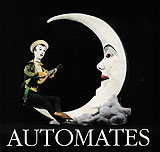

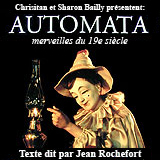
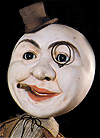
Automata were mechanical marvels
of the 19th century, fragile compositions of cardboard, metal and
paint, animated only by the genius and ingenuity of their makers.
They incarnate the most fascinating aspects of turn-of-the-century
Paris, whether they show ordinary people at their daily tasks, acrobats
performing incredible tricks, or colorful entertainers.
With this documentary, the viewer embarks on an unprecedented voyage
into a fascinating world. The history of mechanical figures, from
Antiquity to the height of their popularity during the nineteenth
century, is illustrated with period documents. Rare footage of the
interior mechanisms and explanatory diagrams afford the layman a clear
understanding of how they actually work.
But perhaps the most enjoyable of all is just watching the automata in
motion - dancers, acrobats, magicians, clowns - over 80 pieces selected
from among the most outstanding collections worldwide. Many of them
have never before been shown to the public, and never together on one
videocassette.
Come explore the world of automata in this 52-minute videocassette,
incorporating much original music of the actual automata as well as
enjoyable period music.
Running time approximately 52 minutes
Produced by Christian and Sharon Bailly
Filmed by John Dessarzin
Written by Sharon Bailly
1992 Magic World Productions
Narrated by Dick Cavett
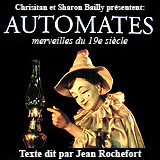
Automata were mechanical marvels
of the 19th century, fragile compositions of cardboard, metal and
paint, animated only by the genius and ingenuity of their makers.
They incarnate the most fascinating aspects of turn-of-the-century
Paris, whether they show ordinary people at their daily tasks, acrobats
performing incredible tricks, or colorful entertainers.
With this documentary, the viewer embarks on an unprecedented voyage
into a fascinating world. The history of mechanical figures, from
Antiquity to the height of their popularity during the nineteenth
century, is illustrated with period documents. Rare footage of the
interior mechanisms and explanatory diagrams afford the layman a clear
understanding of how they actually work.
But perhaps the most enjoyable of all is just watching the automata in
motion - dancers, acrobats, magicians, clowns - over 80 pieces selected
from among the most outstanding collections worldwide. Many of them
have never before been shown to the public, and never together on one
videocassette.
Come explore the world of automata in this 52-minute videocassette,
incorporating much original music of the actual automata as well as
enjoyable period music.
Running time approximately 52 minutes
Produced by Christian and Sharon Bailly
Filmed by John Dessarzin
Written by Sharon Bailly
1992 Magic World Productions
Narrated by Jean Rochefort

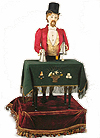
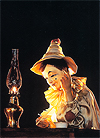













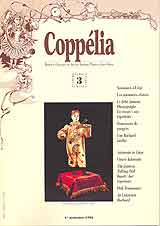
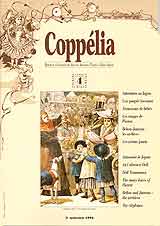
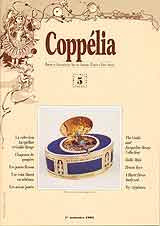
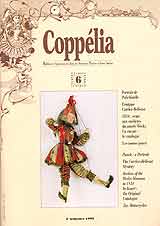
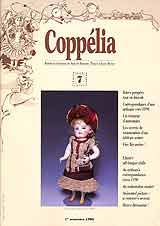
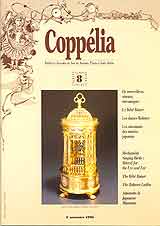
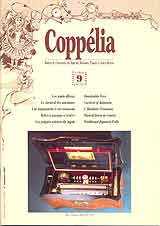
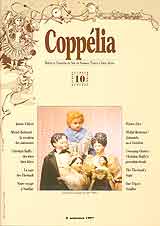
To download a high quality image, right-click on the picture, then "Save target as..." select a folder on your computer.
Pour télécharger une image en haute définition, cliquez avec le bouton droite sur l'image, puis choisissez dans le menu contextuel